

For many people in Honolulu, clear vision can make everyday life feel simpler, whether that means spotting surf conditions from shore, commuting across Oahu, working on a screen, or enjoying a sunset without reaching for glasses. People researching LASIK surgery Honolulu should begin with a broader question: which form of vision correction best matches their eyes, health history, and lifestyle?
LASIK is widely recognized, but it is only one of several surgical options. PRK, implantable collamer lenses, often called ICLs, and refractive lens exchange may be considered in different circumstances. The right approach is not necessarily the one with the fastest recovery or the strongest marketing message. It is the one supported by a careful evaluation and realistic expectations.
What Vision Correction Surgery Does
Refractive errors occur when the eye does not focus light precisely on the retina. The main types include myopia, or nearsightedness; hyperopia, or farsightedness; astigmatism; and presbyopia, the age-related loss of near focusing ability. Refractive errors affect the way light focuses in the eye, which is why glasses, contacts, and surgery can each improve vision through different methods.
Corneal laser procedures change the cornea’s shape to improve focus. Lens-based procedures correct vision by placing a lens inside the eye or replacing the natural lens. The goal is usually reduced dependence on glasses or contact lenses, not a guarantee of perfect vision in every situation.
How LASIK, PRK, ICL, and Lens Exchange Differ
LASIK in Honolulu
LASIK creates a thin corneal flap, then uses a laser to reshape tissue beneath it. Many patients experience relatively quick early visual recovery, but corneal thickness, corneal shape, and dry-eye symptoms are important considerations. Honolulu’s bright sun, wind, salt air, and frequent outdoor activity can make comfort during recovery especially relevant for people who spend substantial time outside.
PRK
PRK reshapes the cornea without creating a flap. Instead, the eye’s surface layer is removed and allowed to heal after treatment. Early recovery generally takes longer than LASIK, but PRK may be discussed for patients whose corneas or activities make a flap-based procedure less suitable. Someone involved in contact sports, martial arts, or physically demanding work may want to discuss this distinction.
ICL
An ICL is a corrective lens placed inside the eye while the natural lens remains in place. It does not rely on removing corneal tissue in the same way as LASIK or PRK. Eye anatomy, prescription range, lens sizing, and ongoing follow-up all play a role in planning. ICL can be part of the conversation for people who are not ideal candidates for corneal laser surgery.
Refractive Lens Exchange
Refractive lens exchange replaces the eye’s natural lens with an artificial intraocular lens. Age, near-vision goals, and the possibility of future cataract development may influence this discussion. It is a lens-based option, not a corneal reshaping procedure, so its benefits and tradeoffs differ from LASIK and PRK.
Who May Be a Candidate
Eligibility cannot be determined from a prescription alone. Common screening factors include stable vision, healthy corneas, manageable dry-eye symptoms, normal healing potential, and the absence of untreated eye disease. A person’s medical history and medications may also affect the recommendation.
Pregnancy, breastfeeding, a changing prescription, eye inflammation, poorly controlled diabetes, or certain autoimmune conditions can delay surgery or change the plan. The FDA’s pre-surgery checklist addresses factors such as stable refraction, corneal thickness, tear production, risks, and postoperative expectations that should be reviewed before choosing LASIK.
How Honolulu Lifestyle Factors Affect the Choice
Oahu residents often balance work, family, outdoor recreation, and frequent exposure to sun, wind, and ocean water. Those details can shape a vision correction decision. A person who paddleboards, surfs, hikes, or trains outdoors may prioritize freedom from contact lenses. A night driver traveling H-1 before dawn or after dark may want a detailed conversation about glare, halos, and low-light vision. Someone working remotely may be especially attentive to dryness and close-up screen demands.
One patient may value the possibility of a faster early recovery. Another may prefer an option that preserves more corneal tissue. Neither priority is automatically better. The useful question is how each option fits the patient’s actual routine in the Honolulu area.
What Happens During an Evaluation
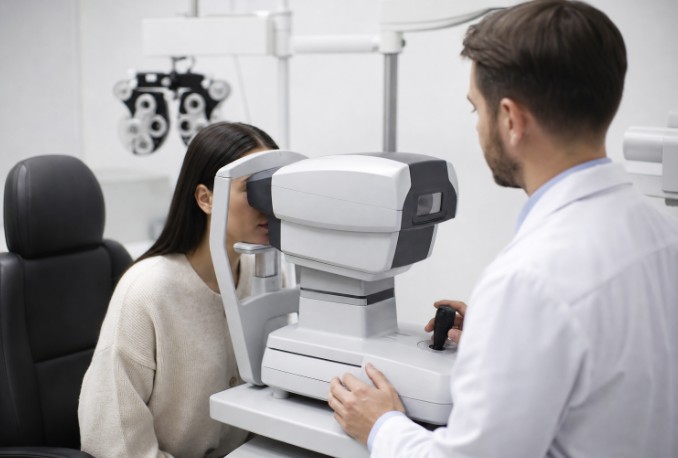
A comprehensive consultation commonly includes a health and eye-history review, current prescription testing, corneal thickness measurements, corneal mapping, dry-eye assessment, and a discussion of pupil size or internal eye dimensions when needed. Contact lens wear may need to pause before certain measurements because lenses can temporarily affect the corneal surface.
The consultation should also cover work demands, sports, driving habits, near-vision needs, previous eye procedures, expected recovery, costs, alternatives, and follow-up care. A sound recommendation may be surgery, a different procedure than expected, or continued use of glasses and contacts.
Recovery and Daily Activities
Recovery varies by procedure and by patient. LASIK often has a shorter early recovery period than PRK, while PRK involves healing of the corneal surface before vision stabilizes. Lens-based procedures have their own medication schedules and follow-up requirements. The treating eye surgeon should provide specific instructions for driving, exercise, swimming, makeup, sun protection, and returning to work.
Dryness, fluctuating vision, glare, halos, or light sensitivity can occur during healing. Worsening pain, sudden vision changes, discharge, or other concerning symptoms require prompt contact with the surgical team.
Risks and Realistic Expectations
Every elective eye procedure involves risk. Possible concerns include dry eye, glare, halos, undercorrection, overcorrection, infection, inflammation, and a later need for glasses or additional treatment. Presbyopia can still develop or progress with age, so a person who sees clearly at a distance after surgery may eventually need reading glasses.
Results can also change as the eyes age or as other eye conditions develop. The most informed choice comes from understanding both the potential convenience and the limitations of the procedure under consideration.
Cost and Planning Questions
Prices vary based on the procedure, testing, technology, follow-up schedule, medication needs, and whether enhancement care is included. Before committing, ask what the quoted fee covers, whether follow-up visits are included, how enhancements are handled, and whether an HSA or FSA can be used. Insurance often treats refractive surgery as elective, although coverage details depend on the individual plan.
Questions to Ask Before Surgery
- Which procedures fit the shape and health of my eyes?
- What results are realistic for distance, computer, and near vision?
- How could dry eye affect my recovery and comfort?
- What side effects are most relevant to my prescription and daily activities?
- When can I safely return to driving, work, exercise, and ocean activities?
- What symptoms should prompt an urgent call after surgery?
- How might future vision changes be managed?
Final Thoughts
The best vision correction choice in Honolulu depends on the person, not the popularity of a procedure. A careful evaluation can clarify whether LASIK, PRK, ICL, refractive lens exchange, or continued use of glasses and contacts makes the most sense in Hawaii. A strong decision considers eye health, recovery, lifestyle, costs, risks, and long-term visual expectations together.

