

Two hundred dollars. That’s the budget. The goal is a small set of pieces that express what you love, work together, and cover most of the situations you’ll dress for in a season — from a con floor to a casual dinner.
It’s very doable. It just requires spending the money in the right proportions, and most people get the proportions wrong: they blow $150 on five graphic tees and have nothing to wear with them.
Here’s the allocation that works, and why.
The Split
| Category | Budget | Share |
|---|---|---|
| One statement piece (dress) | $50 | 25% |
| Two graphic tees | $50 | 25% |
| Accessories | $30 | 15% |
| Neutral supporting pieces | $60 | 30% |
| Buffer | $10 | 5% |
Half the budget goes to the fandom pieces. Nearly a third goes to plain, unremarkable clothes. That ratio is the whole strategy.
The Statement Piece: $50
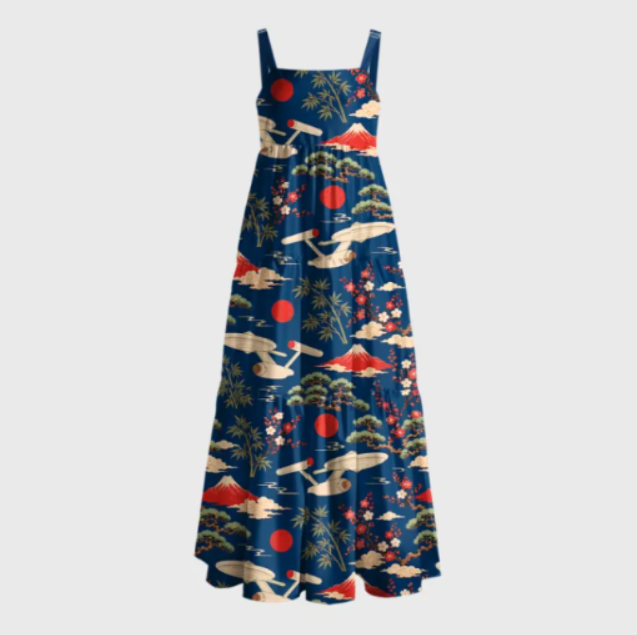
One garment that’s a complete outfit by itself and works as a base for others. A printed maxi dress is the strongest candidate here because of how many roles it fills: sightseeing dress, dinner dress with heels, con outfit with sneakers, beach cover-up, autumn skirt with a knit over the top.
Around $50 is the going rate for a well-made tiered cami maxi with an all-over print. Geeksoutfit’s geek maxi dreses sit right at that price point — sci-fi and fantasy artwork edge to edge on a cut you can dress up or down — which is why the dress anchors this budget rather than, say, a third tee. One versatile piece beats two narrow ones.
Choose a print with a dark or mid-tone background. It’ll pair with more, hide more, and carry into autumn.
Two Graphic Tees: $50
At roughly $22–$28 each from a specialist store — Geeksoutfit’s geek shirts sit in exactly that band — two tees fit. Not three from a bargain marketplace — two that will survive a year of washing.
Rules for picking:
- Different references, different color families. One dark heather, one light or cream.
- Both should work under a jacket and on their own.
- Both in your correct size. Test the first, then order the second.
If you can catch a flash sale, you may get both for $35 and free up money elsewhere.
Accessories: $30
This is where the fandom gets to show up on days you’re wearing plain clothes. Options at this budget:
- Enamel pins: $8–$12 each. Two pins on a jacket or bag.
- Themed socks: $10–$15 a pair. Underrated for how often they get noticed.
- A tote bag: $15–$20. Useful and visible.
A reasonable spend: one pin ($10), one pair of socks ($12), and put the remaining $8 toward the buffer. Or skip the pin and get the tote. Don’t spread the $30 across five tiny things; two good items land better.
Neutral Supporting Pieces: $60
The least exciting category and the most important. Without these, the fandom pieces have nothing to stand on.
Check your closet first. You probably already own dark jeans and some kind of jacket. Budget for what’s missing, roughly:
- Dark straight-leg jeans: $25–$35 at a basic retailer, or $10–$15 secondhand.
- A plain jacket — denim, canvas, or a light bomber: $25–$40 new, often $10–$20 thrifted.
- A plain cardigan or knit: $15–$25.
Thrift stores are the budget’s best friend here. Neutrals are neutrals; nobody can tell where your denim jacket came from. Spending $20 secondhand on a jacket instead of $40 new frees up money for a third tee later.
Colors: black, indigo, olive, cream, tan. Nothing bright. The prints bring the color.
Buffer: $10
Shipping, tax, a replacement pair of socks, or the difference when the tee you want is $27 instead of $25. Don’t skip this line. Budgets fail on shipping.
What Does $200 Actually Get You?
Count the outfits from one dress, two tees, one pair of jeans, one jacket, one knit, plus accessories:
- Dress alone
- Dress + jacket
- Dress + knit over the top
- Dress + tee knotted over (×2)
- Tee + jeans (×2)
- Tee + jeans + jacket (×2)
- Tee + jeans + knit (×2)
Eleven distinct outfits before you count the pins and socks changing the read. For a season, that’s plenty.
Where Do People Overspend?
Too many tees. Five tees and no jacket means five variations of the same outfit.
Bright neutrals. A red jacket isn’t neutral. It’s a third statement piece that competes with the other two.
Novelty over quality. A $12 tee that fades in a month costs more than a $25 tee that lasts two years.
Shoes. Not in this budget on purpose. Wear the sneakers you already own. Shoes are a separate, larger purchase.
If You Have $300 Instead
Add a second dress or a printed skirt ($40–$50), a third tee ($25), and upgrade the jacket ($25 extra). Same proportions — half fandom, a third neutrals, the rest accessories and buffer.
If You Have $120
Drop to one tee and skip the knit. Dress, tee, jeans, jacket, one pin. Still six or seven outfits. The dress carries it.
The Order to Buy In
Neutrals first if you’re missing them — they’re the foundation and the cheapest to source secondhand. Dress second. First tee third; wash it, confirm the size. Second tee and accessories last. Spreading it over a month means each piece arrives into a wardrobe that’s ready for it.
Two hundred dollars, spent in this order and these proportions, produces a small wardrobe that looks like a decision rather than a pile of merch. That’s the difference.

