

Construction projects have many parts happening at the same time: different crews, lots of materials, and tight deadlines. Because of that, mistakes can happen easily. The good news is that many common problems can be avoided if you plan ahead and stay alert from start to finish.
This guide explains the construction errors that show up most often and the simple steps you can take to avoid them, so your project stays on schedule, stays within budget, and stays safe. This includes everything from protecting the structure of a building to keeping important exterior features in good shape, such as fire escapes.
If you need a service that must follow strict safety rules, like fire escape restoration, this resource can help: https://novaconstructionservices.com/services/architectural-metals/fire-escape-restoration/.
What Are Common Construction Mistakes?
Every project is different, but many construction problems repeat again and again. These errors often lead to extra costs, delays, and safety risks. The first step to avoiding them is knowing what they are.
Inaccurate Project Estimating and Budgeting
A project can fall apart fast if the budget estimate is wrong from the start. One common mistake is getting only one bid and assuming it covers everything. Costs often appear later, which can push the project over budget and slow everything down. Also, the cheapest bid is not always the best choice. You should also weigh the contractor’s experience, reputation, and warranty.
Labor costs are also hard to predict. Crew size, skill level, and productivity can change from job to job, and small changes can add up quickly. Material prices can shift too because of market changes, shortages, or inflation. If your price list is old, your estimate may be way off. A good budget needs a full cost review and a realistic contingency amount for surprises.
Hiring Unqualified Contractors or Subcontractors
The contractor you hire has a major impact on the outcome of the project. Many projects go badly because someone hired a contractor who was not properly qualified or who did not manage the job responsibly. If a contractor lacks the right license, insurance, or bonding, the work quality may suffer, and you may face serious financial or legal trouble if something goes wrong.
You need to verify the basics before work starts. Check licenses, review past work, read reviews, and confirm insurance and bonding. If a contractor is not insured and an issue happens, they may not be able to meet their responsibilities, and you may end up paying for the damage.
Missing or Incorrect Permits and Legal Requirements
Skipping permits can stop a project completely. If required permits are missing, local agencies can issue fines and stop-work orders. That can quickly throw off your schedule and budget.
Before work begins, learn which permits you need (building, zoning, environmental, and others). Apply early because permits can take time and may cost more than expected. Also, be clear about who is responsible for permits-the owner, the general contractor, or a subcontractor. Another key point: insurance often will not cover mistakes if the work was done without proper permits, which makes compliance even more important.
Poor Planning and Project Sequencing
Good results start with good planning. If the preconstruction phase is rushed-planning, design work, and construction documents-bigger problems often show up later. Without a clear plan for the budget, schedule, roles, and material orders, the job site can become disorganized quickly.
Construction tasks must happen in the right order. If sequencing is wrong, trades get in each other’s way, safety risks increase, and work may need to be redone. For example, if siding goes up before wiring and electrical boxes are installed, parts may need to be removed and rebuilt. That wastes time and materials and adds major costs. A clear step-by-step plan helps keep work moving safely and smoothly.
Inadequate Communication Among Stakeholders
Poor communication is a major reason projects get delayed and work has to be redone. When architects, engineers, contractors, subs, and clients do not share the same information, even small misunderstandings can turn into big mistakes.
Clients should ask questions whenever something is unclear. Project managers should set up communication methods that are easy to use, especially for clients who are not on-site often. It also helps to put key updates and decisions in writing so there is a clear record and fewer disputes about what was said or agreed to.
Ignoring Safety Protocols and Training
Construction sites can be dangerous, so safety has to come first. Ignoring safety rules, skipping training, or failing to follow site protocols can lead to property damage, serious injuries, harm to the public, and legal trouble.
While you cannot predict every accident, a trained crew is much more likely to avoid major incidents. Safety training should be regular and based on current OSHA rules and guidance. Technology can also help, such as wearables that monitor worker health or cloud tools that help teams track and share safety information.
Overlooking Site Conditions
A major estimating mistake is starting work without fully understanding the job site. Site conditions vary widely depending on soil, drainage, zoning limits, and underground utilities. If the early review is skipped or rushed, major problems can appear later.
If you do not check the site carefully, you may face issues like structural problems, water damage, or expensive design changes mid-project. Site information helps teams pick the right materials, plan the right labor, control costs, and meet code requirements.
How to Prevent Common Construction Mistakes
Fixing mistakes in construction is usually expensive and slow. Preventing them is much easier. With a careful, proactive approach in every phase, many common problems can be avoided.
Conducting Thorough Site Assessments
A detailed site assessment supports better planning and better results. This includes checking soil strength, drainage, zoning limits, and any underground utilities. Spending time here helps estimators and project teams choose the right materials, methods, and labor. It also helps spot problems early, before they turn into delays or budget overruns.
Effective Contractor Vetting and Selection
Project quality depends heavily on the team you hire. A strong vetting process helps you avoid the risk of hiring unqualified workers. This means checking references, confirming prior experience on similar projects, and verifying licenses, insurance, and bonding.
Insurance protects you if someone is injured or if there is damage. Bonding helps protect the work and adds another layer of security.
Picking reliable professionals leads to better craftsmanship and fewer disruptions. Nova Construction Services brings the experience, credentials, and accountability that make all the difference on any project.
Proper Scheduling and Project Management
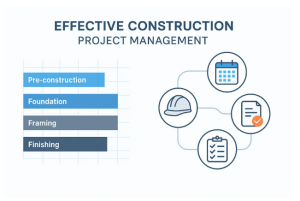
Planning and project management keep the work organized. Create a detailed plan that shows the main steps, timeline, and who is responsible for what-from budgeting to ordering materials. Project management software can help coordinate schedules, track key materials, and reduce confusion, while also helping teams plan around weather and site limits. A clear phased schedule helps each trade complete work in the right order and reduces delays that spread across the job.
Detailed Review of Contracts and Permits
Paperwork matters more than many people expect. Before any work starts, research and get the permits you need from the correct agencies. Apply early since approvals can take time. Also, write and review contracts carefully. A strong contract should spell out the scope of work, payment terms, and how change orders or delays will be handled. Clear documents reduce disputes, support legal compliance, and protect everyone involved.
Regular Communication and Status Meetings
Consistent communication keeps the project steady. Set up clear channels so stakeholders can ask questions and get answers quickly. Project managers should give clients easy contacts and record important decisions in writing to avoid confusion. Regular check-in meetings-on-site or remote-help keep everyone aligned on progress, changes, and risks, reducing mistakes caused by missing information.
Implementing Safety Protocols and Trainings
Safety rules must be taken seriously on every job. Put safety procedures in place and train every worker and contractor regularly. This includes personal protective equipment, safety barriers, and routine site inspections. Keep up with OSHA requirements and use tools like wearables and cloud-based safety systems when helpful. Strong safety habits protect people and also help prevent legal issues, downtime, and costly delays.
Planning for Contingencies and Change Orders
Even well-planned projects can run into surprises, such as weather delays, material shortages, or unexpected site issues. Plan for this instead of hoping it will not happen. Include a contingency fund in your budget, often around 7-10% for risk. Also set a clear process for change orders, with written approvals and documentation. This reduces confusion and helps the team respond quickly when plans need to shift.
What Should You Do When a Construction Mistake Occurs?
Even with strong planning, mistakes can still happen. What matters is how the team responds. A clear, organized response can reduce damage and help prevent the same problem later.
Communicating Issues Early
As soon as a mistake is found, communicate it right away. Do not guess, hide it, or hope it goes unnoticed. Document what happened and notify the right people. Then have a direct conversation with the contractor. The goal is to understand what caused the problem so it can be fixed properly. A calm, team-based approach usually leads to faster solutions than anger or blame. You cannot fix what you do not clearly understand.
Setting Up a Repair or Correction Plan
After the issue is confirmed, create a clear plan to fix it. Some corrections are simple, while others need extra time, labor, and materials. Build a repair schedule and coordinate suppliers, contractors, and subcontractors. A focused meeting can help assign responsibilities and deadlines. This is also the point where you should review the budget and timeline and update expectations based on the new work required.
Taking Steps to Prevent Recurrence
Fixing the mistake is only part of the solution. After the correction, review what went wrong in the process-training, planning, communication, or oversight. Use that review to update procedures, add checkpoints, or improve training. Turning the mistake into a learning moment can help your team avoid the same issue on future jobs.
Best Practices to Minimize Future Construction Errors
Construction methods and standards change over time, so reducing errors is an ongoing effort. The best results come from improving processes, using better tools, and building a team culture that keeps learning.
Embracing Automation and Technology
Manual work and repetitive tasks often lead to more human error. Automation and technology can reduce that risk. Automating data entry, logs, and other admin tasks helps information stay accurate as it moves between teams. Technology can also reduce on-site mistakes through prefabrication, where parts are built off-site in controlled conditions and then installed on-site. Updated software and construction platforms can improve flexibility, productivity, and profit by keeping work organized and visible.
Continuous Training and Development
Materials, methods, rules, and tools change often in construction. Ongoing training helps teams keep up. Safety training is part of this, but so is training on new methods, software, and quality expectations. When workers and managers stay informed, they can adapt faster and catch issues earlier, which improves overall work quality.
Implementing Quality Control Checks
Quality control throughout the project helps prevent problems from growing. Standard tools like templates, standard workflows, and consistent communication methods help teams work the same way every time. Digital tools can also help teams track code requirements and project specs. Regular inspections at key points can spot issues early, when they are easier and cheaper to fix.
Learning from Past Mistakes
Many teams miss the chance to learn after a project ends. Without a post-project review, mistakes often repeat. Reviewing past project data helps estimators and managers understand common cost issues, schedule delays, and risk areas. Using real history helps teams make better decisions on future projects. Adding that data into estimating software can also improve speed and accuracy over time.
Key Takeaways for Avoiding Construction Mistakes
Avoiding construction mistakes takes more than technical skill. It requires strong risk planning, clear standards, steady communication, and a constant focus on safety. Every job site is different, and every choice-materials, schedule, people-affects the final result.
If you invest in solid site checks, choose qualified partners, and make safety a daily habit, you set the project up for better outcomes. Using newer tools and automation also helps reduce errors and improves accuracy, so skilled workers can focus on the parts of the job that need real expertise. In the end, avoiding common construction mistakes is about building work that is safe, reliable, efficient, and made to last.

