

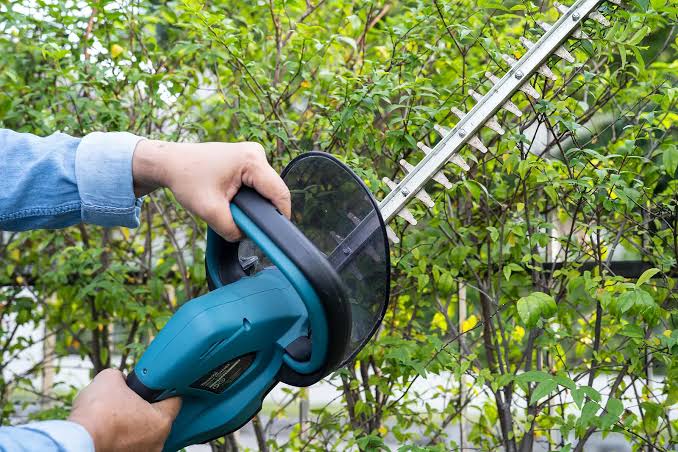
A hedge can contain two very different types of growth at the same time: soft, flexible shoots near the tips and older, woody stems deeper within the canopy. Although both may appear easy to trim, they respond differently to cutting pressure. One may slice cleanly, while the other bends between the teeth, leaving ragged edges or forcing the operator to make repeated passes.
The difference often comes down to blade spacing, also called the blade gap. Along with tooth geometry, blade sharpness, and motor performance, this measurement influences which branches an electric hedge trimmer can cut efficiently. Understanding the relationship helps gardeners select suitable equipment and avoid damaging plants through unnecessary force.
When comparing electric hedge trimmer options, examining the intended cutting capacity alongside blade design provides a more useful starting point than judging a tool by overall size or power alone.
1. How Blade Spacing Controls the Cutting Process
Blade spacing refers to the distance between adjacent cutting teeth or the effective opening available for a branch to enter the cutting zone. Manufacturers may also specify maximum cutting capacity, which is related but not necessarily identical to the physical gap.
During operation, opposing blades move past one another, trapping and severing material between their edges. The branch must enter the tooth opening and remain positioned securely enough for the blades to cut rather than push it aside.
Three factors work together:
- Tooth opening: Determines how much material can enter the cutting area.
- Cutting-edge condition: Sharp, undamaged edges generally sever growth more cleanly.
- Blade movement and motor capability: Influence how effectively the tool maintains cutting action under resistance.
A wider gap can accommodate larger stems, but it does not automatically make a trimmer better at every task. Fine, flexible growth may require more careful technique to prevent shoots from slipping or bending away from the cutting edges.
2. Why Young Shoots Behave Differently From Mature Stems
Young shoots are usually softer, greener, and more flexible than established branches. When a moving blade contacts a thin shoot, the stem may bend before enough cutting force develops. If it escapes the tooth opening, the result can be an uneven tip rather than a clean cut.
Mature stems behave differently. Their greater diameter and often tougher, woodier structure demand more cutting force. A narrow tooth opening may prevent them from entering the cutting zone properly, even when the trimmer handles soft growth exceptionally well.
This distinction becomes especially noticeable when shaping mixed hedges. Fresh growth may extend several inches beyond a dense framework of older branches. A tool suited to maintaining the outer surface might not be appropriate for reducing the underlying woody structure.
The practical lesson is straightforward: choose cutting capacity for the thickest stems you genuinely need to trim, while considering how the blade handles the finer growth that makes up much of the hedge.
3. How Narrower Blade Gaps Improve Control Over Fine Growth
A trimmer with relatively close tooth spacing can be useful for maintaining formal hedges, shaping small-leaved shrubs, and controlling frequent flushes of tender growth.
Smaller openings can help keep fine shoots engaged between the teeth instead of allowing them to move freely across the cutting area. With sharp blades and a steady cutting motion, this can support a more uniform surface.
However, close spacing has limits. If branches exceed the tool’s rated capacity, they may jam, resist the blades, or require repeated attempts. Narrower spacing should not be mistaken for greater cutting precision in every situation.
For routine maintenance, use controlled, shallow passes rather than forcing the blade deeply into a thick hedge. Trimming a little at a time allows the teeth to encounter less material simultaneously and makes it easier to identify branches that need a different cutting method.
4. When Wider Tooth Spacing Becomes More Useful
Wider blade gaps are generally designed to accommodate thicker growth, making them useful when maintaining established hedges with a mixture of slender shoots and more substantial stems.
Consider a mature privet hedge that has been left untouched for a season. Its outer layer may consist largely of flexible green growth, while older stems underneath have become noticeably thicker. A trimmer with insufficient cutting capacity may glide through the surface but struggle whenever a woody branch enters the teeth.
A wider opening can provide more room for these stems to enter the cutting zone. Yet the actual result still depends on the manufacturer’s rated capacity, blade condition, and the species being trimmed.
Thicker teeth openings do not eliminate the need for pruning tools. Branches that are too large, unusually hard, or poorly positioned may be better handled with hand pruners, loppers, or an appropriate pruning saw.
5. Narrow Versus Wide Spacing: How to Choose for Your Hedge
The best blade configuration depends on the balance between fine shaping and heavier maintenance.
| Consideration | Relatively narrow spacing | Relatively wide spacing |
| Fine, flexible shoots | Often offers good control | May require more deliberate technique |
| Established woody stems | Limited by the rated cutting capacity | Can accommodate larger stems within its rating |
| Formal hedge shaping | Often well suited | Can work, depending on tooth design |
| Overgrown hedge renovation | May struggle with thick growth | May handle moderate stems, but is not a substitute for pruning tools |
| Best selection criterion | Fine-growth control and finish | Adequate capacity for thicker branches |
These are general tendencies, not guarantees. Two trimmers with similar tooth spacing may perform differently because of blade geometry, motor design, and manufacturer specifications.
Before purchasing, check the maximum branch diameter the manufacturer recommends, then compare it with the actual growth in your hedge. Avoid selecting a model based on tooth spacing alone.
6. A Practical Method for Trimming Mixed-Age Hedges
A reliable approach separates surface maintenance from structural pruning. This reduces unnecessary strain on the tool and helps preserve a consistent hedge profile.
- Inspect the canopy. Identify thin new shoots, thicker established stems, and any dead or damaged branches.
- Remove unsuitable branches first. Use appropriate hand tools for woody stems that exceed the trimmer’s rated capacity.
- Begin with light surface passes. Hold the blade steadily and let the teeth do the work rather than pressing aggressively into the foliage.
- Check the finish frequently. Step back periodically to spot uneven sections, missed shoots, and areas that need a lighter touch.
- Stop if the blade struggles. Repeated stalling, snagging, or bending branches indicate that the material may be too thick or the cutting technique needs adjustment.
Always follow the tool manufacturer’s operating instructions, wear suitable eye and hearing protection, and disconnect the power source or remove the battery before clearing obstructions or inspecting the blades.
7. Common Mistakes That Reduce Cutting Quality
Even a well-matched trimmer can deliver poor results when the technique is unsuitable for the growth.
Assuming wider gaps always mean better performance: A larger opening can accommodate thicker branches, but it does not guarantee a cleaner finish on delicate shoots.
Forcing oversized stems between the teeth: This can cause jamming, place unnecessary strain on the mechanism, and produce uneven cuts. Respect the stated cutting capacity.
Ignoring blade maintenance: Resin, sap, dirt, and dull cutting edges can interfere with smooth operation. Clean and maintain blades according to the manufacturer’s instructions.
Trimming every hedge at the same time of year: Different species have different growth patterns and pruning requirements. Confirm the appropriate timing before making substantial cuts, especially around flowering periods or active nesting seasons.
Removing too much growth at once: Heavy cutting can expose bare interior branches and leave a hedge looking thin. Regular, moderate maintenance is often easier to manage than occasional aggressive trimming.

