

Understanding Benign Prostatic Hyperplasia: Causes, Symptoms, and Diagnosis
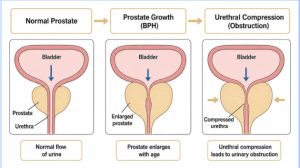
The prostate is a walnut-sized gland that sits just below the bladder, surrounding the urethra—the tube that carries urine out of the body. As men age, the prostate gland naturally begins to grow. This growth is driven by complex hormonal shifts, particularly the activity of dihydrotestosterone (DHT), a potent derivative of testosterone. As the prostate enlarges, it begins to squeeze the urethra like a kink in a garden hose. This mechanical obstruction is what leads to the classic urinary symptoms that disrupt daily life.
Diagnosing BPH is a standard process that helps your doctor rule out other conditions, such as prostate cancer or infections. The evaluation typically begins with a thorough medical history and a digital rectal exam (DRE), which allows a physician to feel the size and texture of the prostate. To gain a clearer picture, doctors often use the International Prostate Symptom Score (IPSS), a questionnaire that quantifies how much your symptoms are impacting your quality of life.
Further clinical testing may include a prostate-specific antigen (PSA) blood test, which is a standard screening tool. Your doctor might also perform a urinalysis to check for signs of infection or blood. For a more detailed assessment, uroflowmetry measures the speed and force of your urine stream, while a post-void residual test uses an ultrasound to see how much urine remains in your bladder after you think you have finished emptying it.
Recognizing Primary BPH Symptoms and Complications
The symptoms of BPH are often categorized as “lower urinary tract symptoms” (LUTS). You may notice that you have to start the flow of urine with extra effort, or that your stream is weak, interrupted, or slow to stop. Many men report “nocturia,” which is the need to wake up multiple times throughout the night to urinate.
If left unmanaged, these symptoms can lead to more serious complications. Chronic obstruction can cause the bladder muscle to weaken over time, leading to urinary retention—the inability to empty the bladder at all. This can increase the risk of developing bladder stones, recurrent urinary tract infections (UTIs), and, in severe cases, kidney damage caused by the backpressure of urine.
Clinical Diagnostic Procedures for Prostate Evaluation
When symptoms are persistent, your urologist may suggest more advanced diagnostic imaging. A transrectal ultrasound provides high-resolution images of the gland’s internal structure and volume. In some cases, a flexible cystoscopy—where a tiny camera is guided into the urethra—allows the doctor to visualize the obstruction directly. Pressure-flow studies, which measure the pressure within the bladder during urination, are sometimes used to confirm that the symptoms are indeed caused by an obstruction rather than a bladder muscle issue.
Lifestyle Adjustments and Conservative BPH Management
For men with mild symptoms, the first step is often “watchful waiting” combined with lifestyle modifications. These changes are surprisingly effective at reducing the frequency of bathroom trips and improving overall comfort.
Fluid management is the cornerstone of conservative care. While staying hydrated is important for overall health, many men find that limiting fluid intake two to three hours before bedtime significantly reduces the number of nighttime awakenings. Additionally, moderating your intake of caffeine and alcohol—both of which act as bladder irritants and mild diuretics—can make a noticeable difference.
“Double voiding” is another simple technique: after you finish urinating, wait a few moments and try to go again to ensure the bladder is fully empty. Pelvic floor exercises, often called Kegels, can also help strengthen the muscles that support the bladder, potentially improving control and reducing the feeling of urgency. Maintaining a healthy weight and staying physically active are also linked to lower risks of severe BPH symptoms.
Oral Medications in Enlarged Prostate Treatment
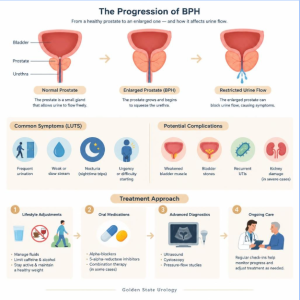
When lifestyle changes aren’t enough, medication is often the next step on the treatment ladder. Alpha-blockers, such as tamsulosin or alfuzosin, work by relaxing the smooth muscles of the prostate and the bladder neck. This allows urine to flow more freely and usually provides relief within a few days or weeks.
For men with larger prostates, 5-alpha-reductase inhibitors like finasteride or dutasteride are often prescribed. These medications work by blocking the hormonal changes that cause the prostate to grow, effectively shrinking the gland over time. It is important to note that these drugs can take several months to reach their full effect. In some cases, doctors may recommend a combination of these two types of medication for a more comprehensive approach. Other options, such as tadalafil (a medication also used for erectile dysfunction) or anticholinergics, may be added to specifically address storage symptoms like urgency.
Modern Enlarged Prostate Treatment: Minimally Invasive Therapies
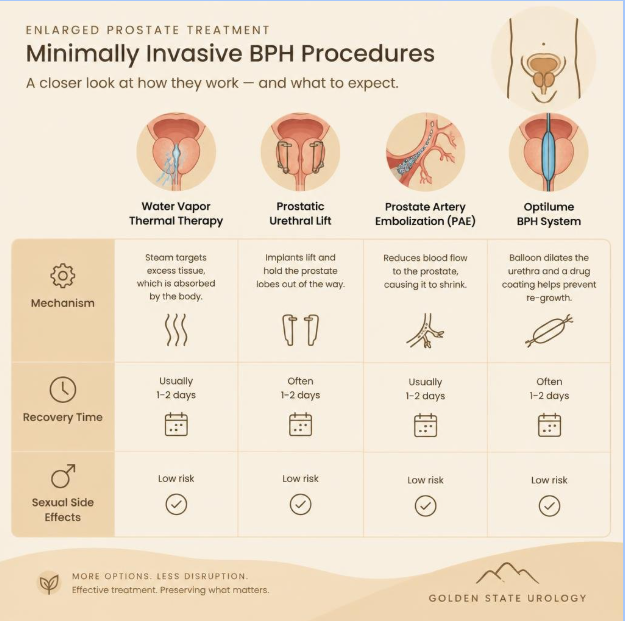
The landscape of enlarged prostate treatment has evolved significantly, moving away from the “all or nothing” approach of traditional surgery. Today, we have a variety of minimally invasive procedures designed to be performed in an office or outpatient setting. These procedures prioritize preserving sexual function while effectively removing the obstruction.
Water Vapor Thermal Therapy and Prostatic Urethral Lift
Water vapor thermal therapy, often known as the Rezūm system, is a clever, minimally invasive procedure. It uses the natural energy stored in water vapor to target the excess prostate tissue. A small amount of steam is injected into the prostate, where it condenses and causes the obstructive cells to die. Over the following weeks, your body naturally absorbs this tissue, opening up the urethra.
Alternatively, the UroLift system takes a mechanical approach. Instead of removing tissue, it uses tiny, permanent implants to lift and hold the enlarged prostate lobes out of the way. This creates an unobstructed path for urine to flow. Both of these options are excellent for men who want to avoid the potential sexual side effects sometimes associated with more invasive surgeries.
Emerging Interventions: PAE and Balloon Systems
The field continues to advance with options like Prostate Artery Embolization (PAE). This is a highly specialized procedure performed by an interventional radiologist. Using a catheter inserted through the wrist or groin, the doctor delivers microscopic beads to the arteries that supply blood to the prostate. By reducing the blood flow, the prostate shrinks, relieving the pressure on the urethra.
Another new arrival is the Optilume BPH system, which uses a drug-coated balloon to dilate the narrowed urethra. The balloon creates a channel through the prostate, and the medication coating helps prevent the tissue from growing back together, maintaining the opening over time.
Surgical Options for Severe Obstruction and Gland Enlargement
For men with very large prostates or those who have not found success with medications or minimally invasive options, surgery remains the gold standard for long-term relief. These procedures are designed to remove the obstructive tissue entirely, providing durable results that can last for decades.
Surgical Procedures in Enlarged Prostate Treatment
The most common surgical approach is the Transurethral Resection of the Prostate (TURP). During this procedure, a surgeon removes the inner portion of the prostate using a specialized instrument. It is highly effective and has a long track record of success.
Holmium Laser Enucleation of the Prostate (HoLEP) is another powerful option. Instead of cutting the tissue away in small pieces, the laser is used to “shell out” the entire obstructive lobe of the prostate in one piece. This tissue is then moved to the bladder and suctioned out. HoLEP is particularly well-suited for men with very large prostates and has a lower risk of bleeding compared to traditional TURP. Other laser-based therapies, such as the GreenLight laser, use high-energy light to vaporize the obstructive tissue, offering a quick recovery and minimal bleeding.
Managing Postoperative Recovery and Sexual Side Effects
Recovery after surgery is a vital part of the process. Most patients will have a catheter in place for a few days to allow the area to heal. While you may experience some temporary urgency or discomfort during urination, these symptoms usually subside as the swelling goes down.
A common concern for many men is the impact of surgery on sexual function. It is important to distinguish between erectile function and ejaculatory function. Many modern surgical techniques, including laser procedures, are designed to preserve the nerves responsible for erections. However, some surgeries may lead to “retrograde ejaculation,” where semen enters the bladder rather than exiting the body. While this is not harmful and does not affect the sensation of orgasm, it is a point to discuss with your surgeon so you know exactly what to expect.
Frequently Asked Questions About BPH Management
How do I know which prostate procedure is best for me?
The “best” procedure is highly individual. It depends on your prostate size, the severity of your symptoms, your overall health, and your personal priorities regarding recovery time and sexual side effects. A urologist will help you weigh the pros and cons of each option based on your unique anatomy.
Can an enlarged prostate be completely prevented?
Because BPH is largely driven by the natural aging process and genetics, it cannot be entirely prevented. However, maintaining a healthy lifestyle, managing your weight, and keeping your cardiovascular health in check may help delay the onset of symptoms or keep them manageable for longer.
When is it necessary to transition from medication to procedural intervention?
You might consider a procedure if your symptoms are no longer controlled by medication, if you experience side effects from your pills, or if you develop complications like bladder stones or recurrent infections. If the “ladder of care” shows that your quality of life is still being impacted despite your best efforts with medication, it is time to have a conversation about more definitive options.
Conclusion
Managing an enlarged prostate is a journey, and you have more options today than ever before. From simple lifestyle tweaks that can make your evenings more peaceful to advanced, incision-free procedures that offer quick recovery, there is a path to relief that fits your life.
The most important step is to stop viewing your symptoms as an inevitable burden. By working with a qualified urologist, you can create a personalized plan that addresses your specific needs, restores your comfort, and helps you get back to the activities you enjoy. Whether you are seeking information on enlarged prostate treatment or are ready to take the next step in your care, you don’t have to navigate these changes alone. Your quality of life is the priority, and there is a solution waiting for you.

